




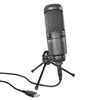
Condenser Microphones
(62 products) Save €26,00
External warehouse. Estimated delivery in 9–14 business days. 
External warehouse. Estimated delivery in 9–14 business days. 
External warehouse. Estimated delivery in 9–14 business days. 
External warehouse. Estimated delivery in 9–14 business days. 
External warehouse. Estimated delivery in 9–12 business days. 
External warehouse. Estimated delivery in 9–12 business days. 
External warehouse. Estimated delivery in 9–12 business days. 
External warehouse. Estimated delivery in 9–12 business days.  Sold outSave €129,00
 Sold outSave €219,00
Blue
Blue Baby Bottle SL Condenser Microphone + Free Gift
€256,95€475,95Unit price /Not available
Made to order. Estimated delivery in 8–12 business days. 
Made to order. Estimated delivery in 8–12 business days.


Read more Condenser Microphones
Read more Condenser Microphones
Condenser Microphone: What Musicians Should Know
If you are a musician looking for the best microphone for recording or live performance, a condenser microphone is a solid choice. But what should you know before buying your first one? Read on to learn more about this type of microphone and how to choose the right one for your needs.
What is a Condenser Microphone?
A condenser microphone is a type of microphone that uses an electric field to convert sound into electricity. This type of microphone is known for having high sensitivity to sound frequencies and can therefore capture both high and low frequencies. Condenser microphones are common in the music industry, especially when it comes to recording vocals or acoustic instruments such as Yamaha, Roland, etc.
When purchasing a condenser microphone, one should be aware of its power supply requirements as well as its sensitivity to shock and vibrations. There are many different models on the market with varying prices and qualities. It is recommended to research ge different brands to ensure you get the right model. Be sure to check out our entire selection and be cautious about buying used microphones on sites like dba, as they may sometimes have been damaged or have other issues.
The Advantages of a Condenser Microphone
Condenser microphones are popular among musicians because they have high sensitivity and can capture detailed sounds. They are particularly suitable for recording acoustic instruments and vocals, making them a good choice both in the studio and live on stage. Additionally, they have great directionality, ensuring precise sound capture.
The advantages include:
- High sensitivity for detailed sound reproduction
- Suitable for recording acoustic instruments and vocals
- Great directionality for precise sound capture
Both beginner and professional musicians can benefit from these advantages by choosing a condenser microphone from brands StudioMate, SE Electronics, RØDE, among others. With a wide frequency response of up to 20 kHz, these microphones also ensure that all nuances in your recording are captured.
The Disadvantages of a Condenser Microphone
A condenser microphone has several disadvantages compared to dynamic microphones. First and foremost, it is more expensive than most dynamic microphones on the market, which can be a challenge for both amateur and professional musicians. Additionally, it also requires phantom power or batteries to function properly, which can incur extra costs.
Another disadvantage of a condenser microphone is its sensitivity to loud sounds, as this can result in clipping in the recording. This means that if you play your electric guitar or use other high-frequency instruments during recording, you risk ruining the result.
- More expensive than dynamic microphones
- Requires phantom power or batteries to function properly
- Sensitive to loud sounds and can cause clipping in the recording
What Kind of Condenser Microphone Should I Choose?
When it comes to choosing the right condenser microphone, there are several factors you should consider. First and foremost, think about what type of recordings you will be using the microphone for. If you will be recording vocals, a microphone with a cardioid polar pattern would be ideal, as it will capture the sound of the vocals while minimizing background noise.
If, on the other hand, you need to record instruments, a microphone with a more directional polar pattern may be better suited, as it will focus on the specific sound source and minimize surrounding noise.
Another factor you should consider is the sensitivity of the microphone. If you are recording loud sounds, such as a drum or an amplified instrument, a microphone with high sensitivity will be ideal. Conversely, if you are recording quieter sounds, such as an acoustic guitar, a microphone with low sensitivity will be better suited.
Finally, you should also consider your budget and the quality of the microphone. If you are a professional musician, it is worth investing in a high-quality condenser microphone from a reputable brand like StudioMate, SE Electronics, or RØDE. If you are an amateur and have a limited budget, you might consider buying a cheaper condenser microphone from a lesser-known brand or a dynamic microphone instead. However, keep in mind that the quality of your recording will depend on the quality of your microphone, so it may be worth investing a little extra for better sound.
Regardless of which condenser microphone you choose, it is important to take good care of it and store it properly to ensure its longevity and optimal performance. Clean the microphone regularly and store it in a protective bag or case when not in use. With the right care, your condenser microphone can be a valuable investment in your music career.
How do I use a condenser microphone correctly?
To use a condenser microphone correctly, it is important to consider the following factors:
1. Phantom power: Most condenser microphones require phantom power to function properly. Make sure to connect the microphone to a mixer or amplifier capable of providing this power.
2. Distance: Depending on the desired sound and the microphone's polarity, you should place the microphone at an appropriate distance from the sound source. Generally, it is best to place the microphone close, but not too close, to the sound source to avoid picking up unwanted noise.
3. Direction: Be aware of the microphone's polarity and direction. Some microphones are directional and require you to point them at the sound source to achieve the best sound quality.
4. EQ: Use an equalizer to adjust the frequency response of the microphone and achieve the desired sound.
What is the connection between a condenser microphone and an amplifier system?
A condenser microphone is a type of microphone that requires a power source to function. This is typically provided by an amplifier system, either via phantom power or a separate power source. To achieve the best sound quality from a condenser microphone, it is important to have a good amplifier system that can deliver the necessary power and amplification to the microphone. This way, you can achieve a rich and detailed sound, which is ideal for recording music and vocal recordings. Therefore, it is important to choose an amplifier system that is compatible with the chosen condenser microphone to achieve the best sound quality.
Are condenser microphones suitable for live performances?
Condenser microphones are typically best suited for recording situations where there is more control over the sound environment. The reason for this is that condenser microphones have a high sensitivity and can capture even the smallest nuances in sound. This can be an advantage in a studio recording, but it can also mean that the microphone picks up unwanted noise and feedback during a live performance. Therefore, many musicians choose to use dynamic microphones for live performances, as they are more robust and have a lower sensitivity, making them better suited for a more unpredictable and noisy sound environment. However, there are some condenser microphones that are specifically designed for live performances and have a more robust construction and integrated noise reduction, so it is not entirely impossible to use a condenser microphone for live performances, but it is important to choose the right model and take into account the sound environment and other factors.
Also, see our selection of dynamic microphones
